
Overview
How permanent magnets fit the application
Magnetic separation captures ferrous wear particles, fasteners and other tramp metal before they damage equipment or contaminate a product. Effective systems bring material close to a high-gradient pole surface and give captured particles a protected place to remain until cleaning.
Field strength at the surface is only one variable. Product depth, flow rate, particle size, viscosity, temperature and cleaning access determine whether a separator works in the actual process. Food and regulated applications also require suitable housings, finishes and validation beyond the magnet itself.
Specify the system
Selection factors to define first
Particle material and minimum particle size that must be captured
Flow path, product depth, velocity and allowable pressure drop
Continuous process temperature and washdown or chemical exposure
Cleaning frequency, retained-product risk and operator safety
Material options
Magnet types commonly considered
These are starting points, not universal prescriptions. Temperature ratings and field performance depend on magnet geometry and the complete magnetic circuit.
N45SH neodymium
High field gradients in compact separators with process heat up to the grade limit.
Read the material guideSm2Co17 samarium cobalt
Hot, corrosive or thermally cycling processes where field stability is important.
Read the material guideCeramic Grade 8
Large, economical separation assemblies and elevated-temperature service with lower energy density.
Read the material guideGeometry
Useful shapes to compare
Stocked reference points
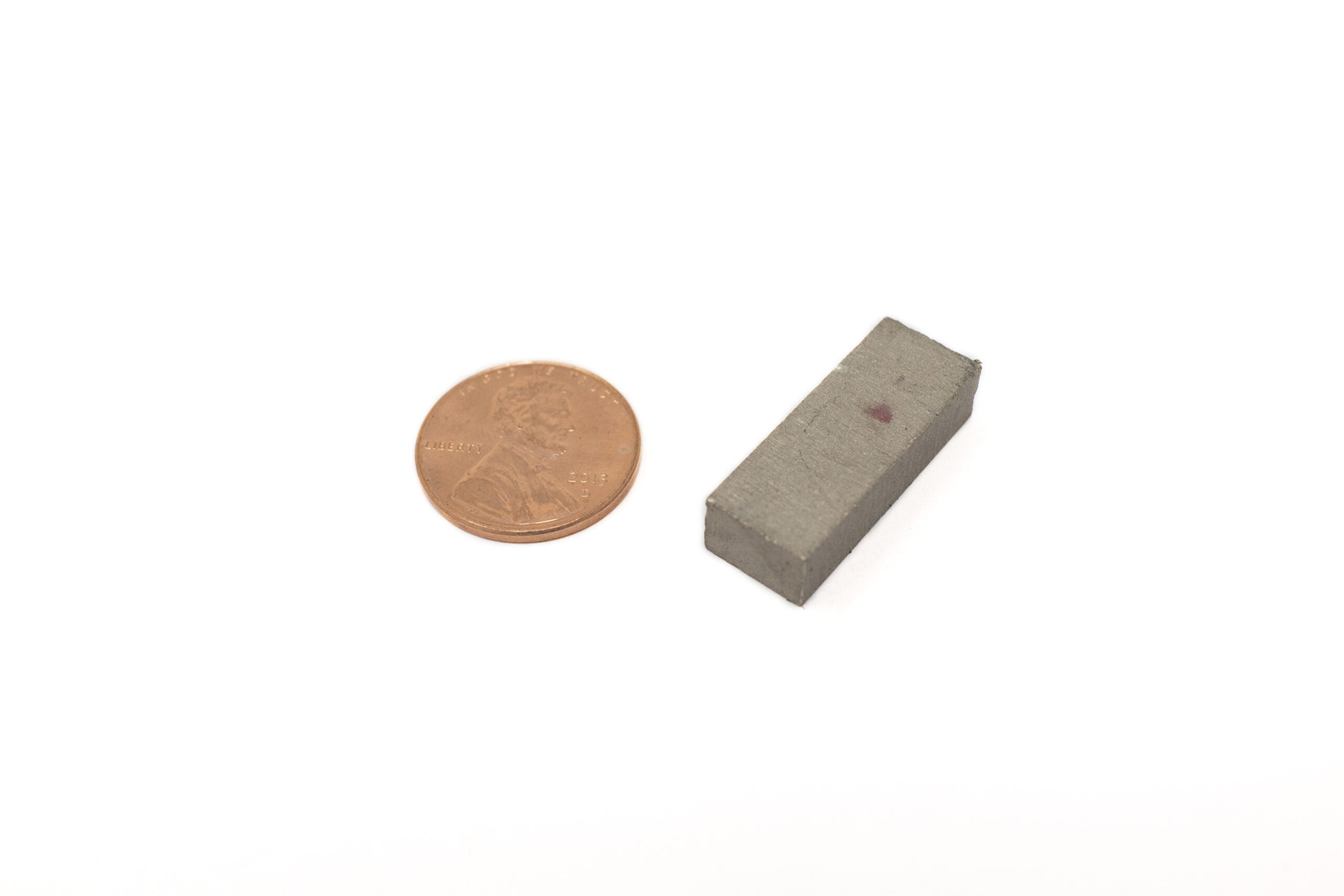
Representative magnets for evaluation
These individual sizes are useful physical reference points. Final selection should be checked against the required field, force, temperature and safety constraints.
Design and safety notes
- Design the housing so the product passes close to the active pole surfaces without dead zones.
- Validate capture using representative contamination, flow and temperature—not a hand-held pull test.
- A complete separator may need sanitary materials, documented cleaning procedures and process-specific compliance review.