
Overview
How permanent magnets fit the application
Holding magnets appear in jigs, access panels, workholding, cabinet latches and temporary assembly aids. Published pull values are usually measured in direct contact with thick, flat mild steel; real assemblies include paint, plating, thin sheet, rough surfaces and sideways loads that reduce usable force.
A reliable design begins with the actual target material and release method. Often the right answer is a larger pole area or steel cup rather than the strongest available grade. The fixture should also keep brittle magnets from taking impact or carrying structural loads directly.
Specify the system
Selection factors to define first
Required holding force with a deliberate safety factor
Target steel grade, thickness, flatness and surface coating
Normal pull versus shear or peel loading
Release force, operator ergonomics and pinch-point protection
Material options
Magnet types commonly considered
These are starting points, not universal prescriptions. Temperature ratings and field performance depend on magnet geometry and the complete magnetic circuit.
N42 or N45 neodymium
Strong compact latches and fixtures at normal industrial temperatures.
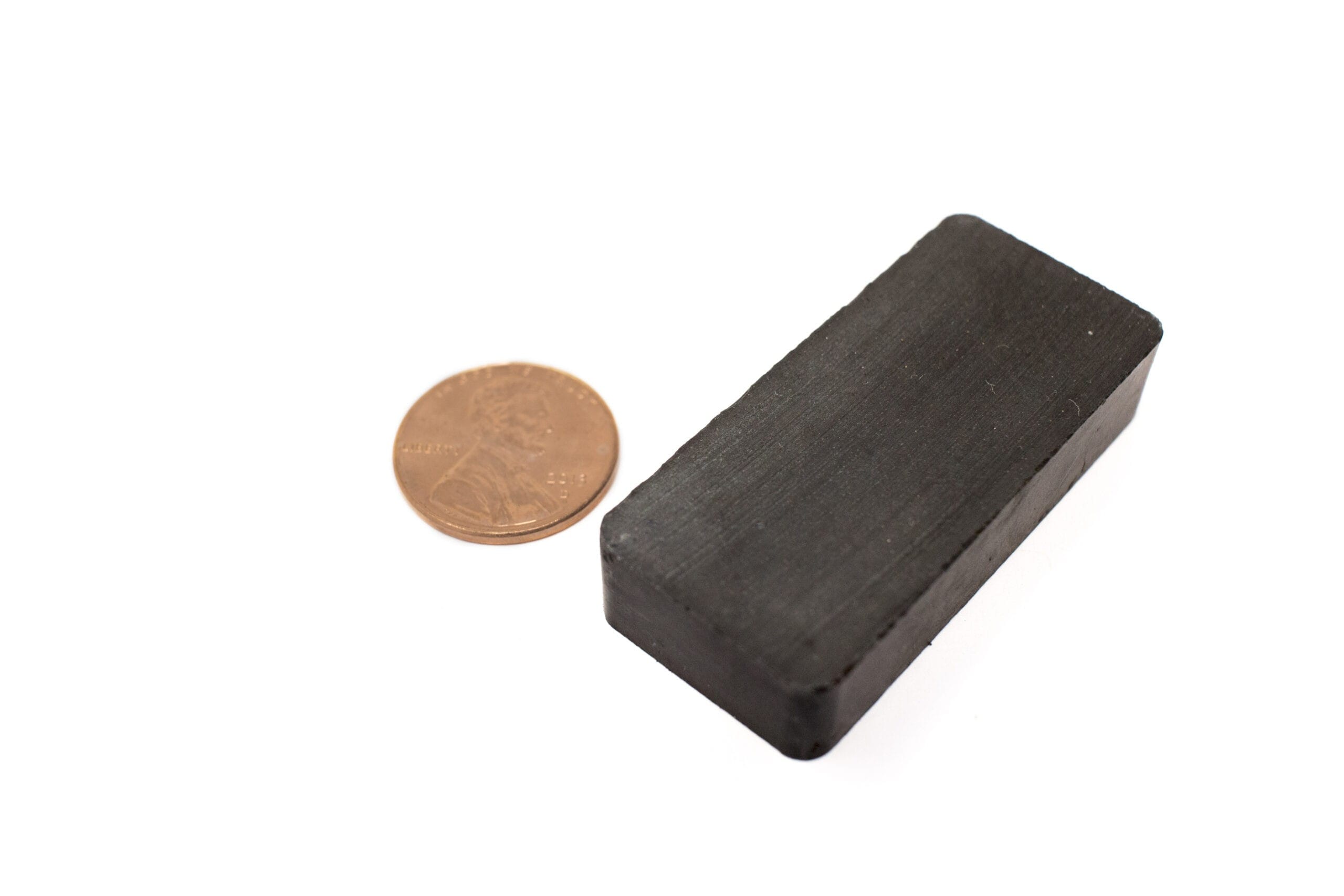
Read the material guideCeramic Grade 8
Economical, corrosion-resistant holding where more volume is acceptable.
Read the material guideN45SH neodymium
Fixtures near welding, molding or heated equipment where standard grades lack margin.
Read the material guideGeometry
Useful shapes to compare
Stocked reference points
Representative magnets for evaluation
These individual sizes are useful physical reference points. Final selection should be checked against the required field, force, temperature and safety constraints.
Design and safety notes
- Test against the actual target thickness and coating; thin sheet saturates quickly.
- Use a steel return path or cup when it improves field use and shields the back side.
- Provide a mechanical stop so the magnet does not absorb impact or act as the only safety restraint.